The browser you are using is not supported. Please consider using a modern browser.

How to Choose the Right Garment Weight for Your Custom T-Shirts
How to Choose the Right Garment Weight for Your Custom T-Shirts
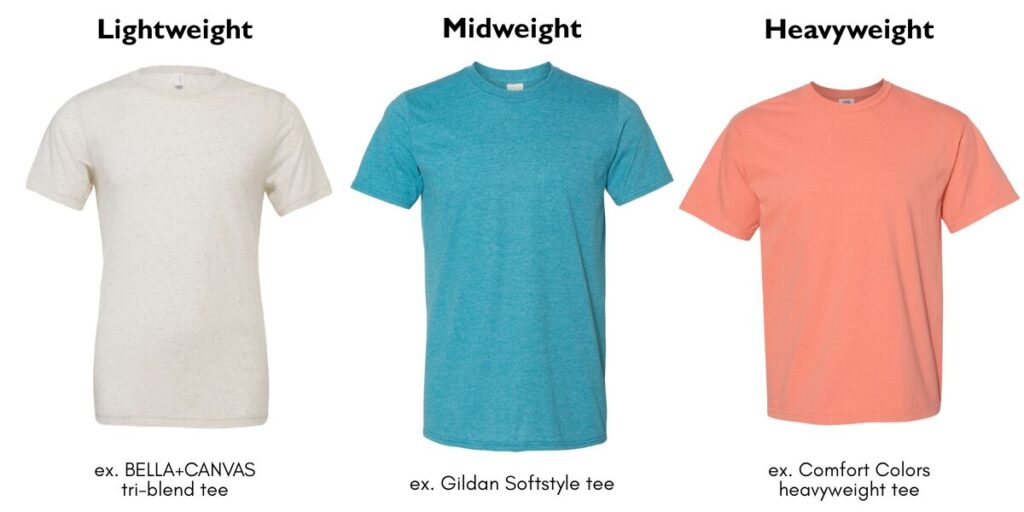
Garment weight matters more than you think
In custom printing, the shirt matters just as much as the design. You can have the cleanest artwork in the world, but if it’s printed on the wrong garment, the final product will still fall flat. We see this a lot with customers who focus on price first—and regret it later. The shirt feels flimsy, the print doesn’t hold up, or customers stop wearing it after a few washes. Choosing the right garment weight improves comfort, durability, and how “high-quality” your brand feels the moment someone puts it on. After years of printing for Maryland brands, teams, nonprofits, and events, we’ve learned that garment weight is one of the most important (and misunderstood) decisions in custom apparel.
What “garment weight” actually means
Garment weight refers to how much the fabric weighs, measured in ounces per square yard. In simple terms, it tells you how thick—or thin—the shirt feels. Heavier doesn’t always mean better. A heavier shirt can feel premium and durable, but it may be too warm or rigid for certain uses. Lighter shirts can be breathable and affordable, but they won’t last forever.
Garment weight affects:
-
How the shirt drapes on the body
-
How it feels against the skin
-
How well it holds ink over time
-
How your brand is perceived
Understanding this upfront helps you avoid surprises after your order arrives.
Lightweight t-shirts: Best for promotions and summer events
Lightweight tees are common for large-scale promotions and warm-weather events.
Ideal uses include:
-
Charity runs and walkathons
-
Festivals and outdoor summer events
-
Short-term promotional giveaways
Pros:
-
Breathable and comfortable in the heat
-
Budget-friendly for high-quantity orders
-
Easy to pack, ship, and distribute
Cons:
-
Less durable over time
-
Can show wear faster after repeated washing
-
Less structure, especially with bold prints
Lightweight shirts make sense when the goal is reach, visibility, and comfort in warm weather.
Midweight t-shirts: The most popular choice
This is the go-to option for most of our customers—and for good reason.
Midweight shirts are ideal for:
-
Small businesses
-
Restaurants, breweries, and retail merch
-
Staff uniforms and everyday wear
They strike the perfect balance between comfort, durability, and print quality. The fabric holds ink well, feels substantial without being heavy, and works across seasons in Maryland.
Once customers try this weight, most reorder it again and again because it simply works.
Heavyweight t-shirts: Built for workwear and premium merch
Heavyweight shirts are all about structure and longevity.
Best for:
-
Construction and trade companies
-
Streetwear brands
-
High-end or premium merchandise
Pros:
-
Durable and long-lasting
-
Structured fit that feels premium
-
Ideal for bold, high-impact designs
Cons:
-
Higher cost per shirt
-
Warmer to wear, especially in summer
For brands that want their apparel to feel substantial and intentional, heavyweight tees are an investment that pays off in perceived value.
How garment weight affects print quality
Garment weight directly affects how ink behaves on fabric.
Lighter shirts absorb ink differently than heavier ones, which can impact:
-
Opacity and color vibrancy
-
Longevity of the print
-
Whether the print has a “soft hand” feel
The wrong shirt can make even a great design look cheap, while the right garment elevates the entire project. Matching ink, print method, and fabric weight is key to professional results.
Choosing the right shirt weight for your specific use case
Ask yourself how the shirt will actually be used.
-
Promotional apparel vs. retail merch: giveaways need flexibility; merch needs durability
-
Employee uniforms vs. customer handouts: staff wear requires longevity
-
Seasonal considerations: Maryland summers and winters demand different comfort levels
-
Brand image: premium brands should feel premium in hand
Your audience’s expectations matter just as much as your budget.
Common mistakes local businesses make
We see these issues all the time:
-
Choosing shirts based on the lowest price only
-
Not thinking about how the shirt will be worn after the event
-
Ignoring how fabric weight affects ink performance
These mistakes often lead to reorders, complaints, or apparel that never gets worn.
Advice from a local Baltimore area print shop
Seeing and feeling samples saves money long-term. It helps you understand how the shirt fits, feels, and prints before committing. The right garment weight reduces reprints, increases satisfaction, and makes reorders faster and easier. Working with a local printer means getting real recommendations—not one-size-fits-all solutions. Garment weight affects comfort, durability, and how your brand is perceived. Custom apparel should feel as good as it looks. Before placing your next order, talk with a local print shop that understands your goals. If you want guidance on choosing the right shirt for your project, Charm City Screen Print is here to help businesses create apparel they’re proud to put their name on.
Social Media
Check us out on Instagram
Like us on Facebook
Check in on LinkedIn